

Do Gas Fireplaces Need Inspections Each Year?

A gas fireplace may light with the flip of a switch, but that does not mean it is operating safely. So, do gas fireplaces need inspections? Yes. A professional inspection helps catch venting concerns, gas connection issues, failing components, and combustion problems before they become a risk to your home or family.
Gas appliances are often viewed as lower-maintenance than wood-burning fireplaces, and in some ways they are. There is no ash to remove and no pile of firewood to manage. Still, gas fireplaces have burners, ignition systems, gas lines, safety controls, and, in many cases, a venting system that all need periodic attention. A clean-looking fireplace can still have a problem hidden behind the glass, inside the firebox, or above the roofline.
Do Gas Fireplaces Need Inspections Every Year?
For most homeowners, an annual professional inspection and service visit is the right standard. Many gas fireplace manufacturers recommend yearly maintenance, particularly before the heating season begins. The fireplace owner's manual should always be part of the decision, since service requirements can vary by model.
Annual service is especially wise if your fireplace is used frequently, has not been operated in several seasons, or is part of an older home. It is also a sensible preventive step after storm damage, roof work, water leaks, pest activity, or any remodeling near the fireplace chase or vent.
In Shreveport and surrounding areas, humidity, heavy rain, wind-driven storms, and long periods of nonuse can all affect fireplace and chimney systems. Moisture can damage components, corrode metal parts, and reveal weak points in a chimney cap, chase cover, flashing, or vent termination. A yearly appointment provides a chance to find those concerns while repairs are still manageable.
What a Professional Gas Fireplace Inspection Looks For
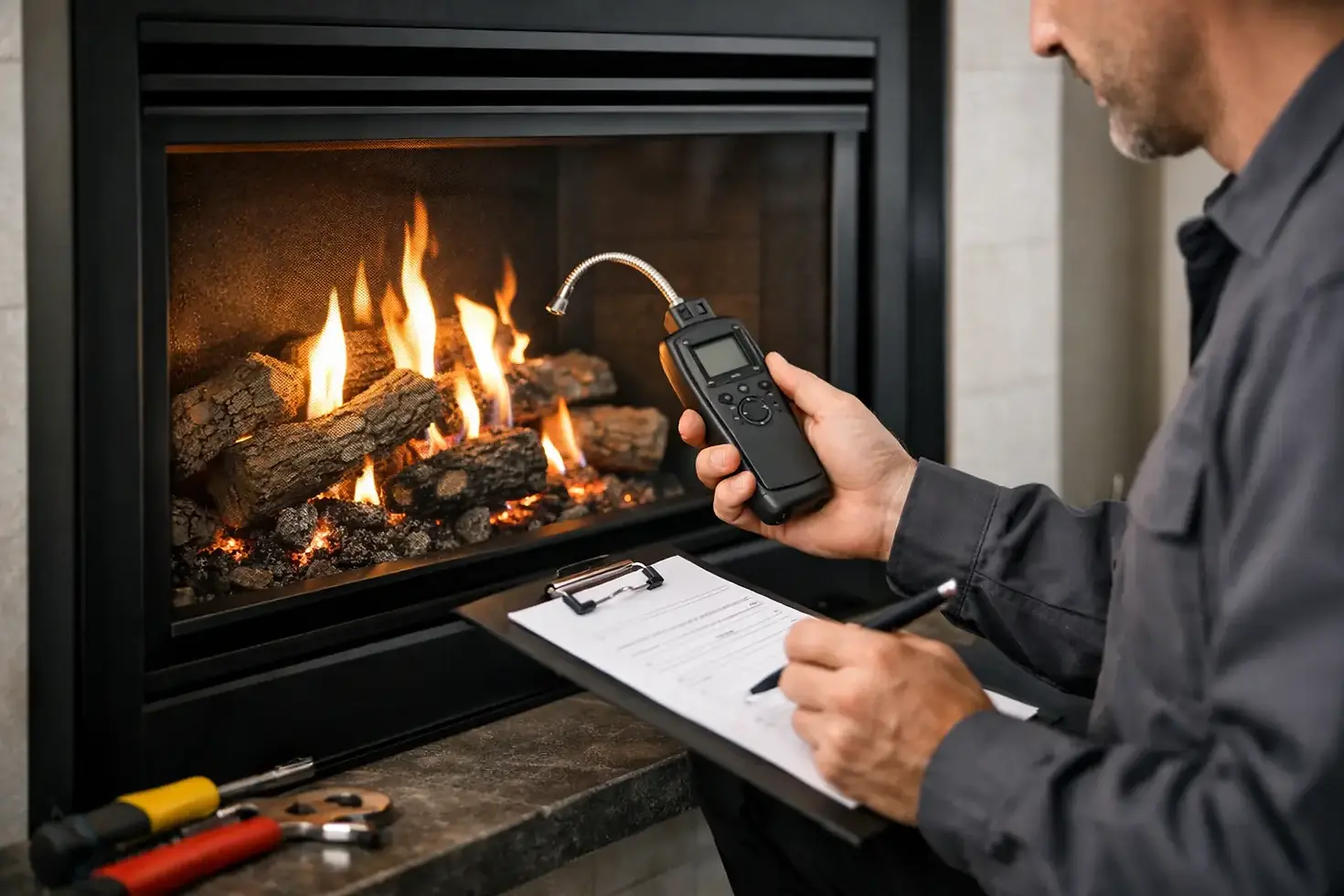
A proper inspection is more than turning the fireplace on and confirming that flames appear. The technician should evaluate the appliance's condition, its operation, and the route combustion gases take out of the home when a vented system is involved.
The visit typically starts with a visual review of the firebox, glass, logs, burner area, controls, and surrounding materials. Dust, pet hair, insects, and debris can collect where homeowners cannot easily see them. Ceramic logs may shift out of position, burner ports can become obstructed, and glass seals can deteriorate over time.
The technician also checks ignition performance and safety components such as the pilot assembly, thermocouple or thermopile, switches, wiring, and control module where applicable. A fireplace that takes repeated attempts to light, shuts off unexpectedly, or produces a weak pilot flame should not be ignored simply because it eventually starts.
For a direct-vent or natural-vent fireplace, the vent system deserves close attention. The vent pipe, termination cap, chimney liner, and exterior components must remain properly connected and free of damage or blockage. Bird nests, leaves, corrosion, loose sections, and water intrusion can interfere with safe exhaust flow. The inspection may also identify signs of improper drafting or incomplete combustion.
A professional should inspect the gas supply connection and look for visible concerns around fittings, valves, and flexible connectors. They may test the appliance's operation and flame appearance according to the manufacturer's specifications. The goal is not just to make the fireplace work, but to confirm it is working as it was designed to work.
Why Skipping Gas Fireplace Service Can Create Problems
Many gas fireplace issues develop slowly. You may not notice a small amount of corrosion, a failing gasket, or a partially blocked vent until the appliance begins performing poorly. By then, the repair may be more involved than routine maintenance would have been.
The most serious concern is carbon monoxide. This odorless gas can result from improper combustion or venting problems. Carbon monoxide alarms are essential protection in any home with fuel-burning appliances, but they are not a substitute for maintaining the fireplace itself. An alarm warns you after a dangerous condition may be present. An inspection is intended to help prevent conditions that can lead to that alarm.
There is also the matter of heat and fire safety. A damaged component, compromised vent, cracked firebox panel, or improperly positioned log set can affect how heat moves through the appliance. In some cases, problems can harm nearby finishes or create unsafe operating conditions.
Routine inspections also protect the fireplace's reliability. The first cold evening of the year is a frustrating time to discover that the pilot will not stay lit or the remote no longer communicates with the unit. Scheduling service before you expect to use the fireplace gives you time to address needed repairs without rushing.
Signs You Should Schedule an Inspection Soon
An annual appointment is a good habit, but certain changes call for service sooner. Do not keep testing or repeatedly operating a fireplace that seems abnormal. Turn it off and arrange for a qualified technician to evaluate it.
Watch for these warning signs:
A gas odor near the fireplace, even if it seems faint or intermittent
Delayed ignition, popping sounds, a pilot that will not stay lit, or repeated shutdowns
Soot on the glass, unusual flame color, or flames that look uneven or unstable
Moisture, rust, staining, loose exterior vent parts, or evidence of an animal nest near the termination
If you smell gas, leave the area, avoid switches and open flames, and follow your gas utility's emergency instructions. That situation is not a routine maintenance issue.
Vented and Vent-Free Gas Fireplaces Have Different Needs
Whether your gas fireplace needs a chimney-related inspection depends partly on its design. Direct-vent fireplaces pull combustion air from outdoors and exhaust gases outdoors through a dedicated vent. Natural-vent units use a chimney or vertical vent system. Both need professional evaluation because their vent pathways and termination points must remain sound and unobstructed.
Vent-free fireplaces do not use a chimney or exterior vent in the same way, but they still need regular service. Their burners, pilot systems, oxygen depletion safety sensors, logs, and controls require careful inspection. Because vent-free appliances operate inside the living space, following the manufacturer's instructions and local code requirements is particularly important.
This is one reason a quick visual check is not enough. The right service approach depends on the appliance type, installation method, age, fuel supply, and condition of the surrounding chimney or chase.
What Homeowners Can Do Between Visits
Homeowners can help keep a gas fireplace in better condition without trying to perform repairs themselves. Keep the area around the appliance clear of furniture, decorations, and combustible materials. Check that carbon monoxide alarms are installed and working according to their instructions. If your fireplace has glass, wait until the unit is completely cool before cleaning it with products approved for fireplace glass.
It also helps to pay attention when you use the appliance. Notice whether the flames look different than usual, whether the ignition is slower, or whether new odors appear. Take a photo of visible staining, rust, or unusual flame patterns before your appointment. Those details can help a technician understand when the issue began.
Avoid moving logs, adjusting burner parts, or attempting to repair gas connections. Gas fireplaces are designed with specific clearances and log placement requirements. A small change that looks harmless can affect combustion and performance.
Choose an Inspection That Includes Clear Answers
A worthwhile inspection should leave you with more than a statement that the fireplace was checked. You should understand what was examined, what condition the system is in, and whether any corrective work is recommended. If repairs are needed, ask what problem the repair addresses, how urgent it is, and what could happen if it is delayed.
Louisiana Chimney Services approaches gas fireplace and chimney concerns with that practical mindset: inspect carefully, explain findings plainly, and recommend the work that actually fits the condition of the system. Homeowners deserve a clear picture of what is safe to use now and what needs attention.
Before the next cool stretch arrives, give your gas fireplace the same preventive care you would give any other fuel-burning appliance. A scheduled inspection can turn an uncertain first fire of the season into a comfortable, confident one.


Comments